
100MW Mountainous PV Power Plant Ground-mounted System | Hebei, China
May 13, 2026
1. Project Overview
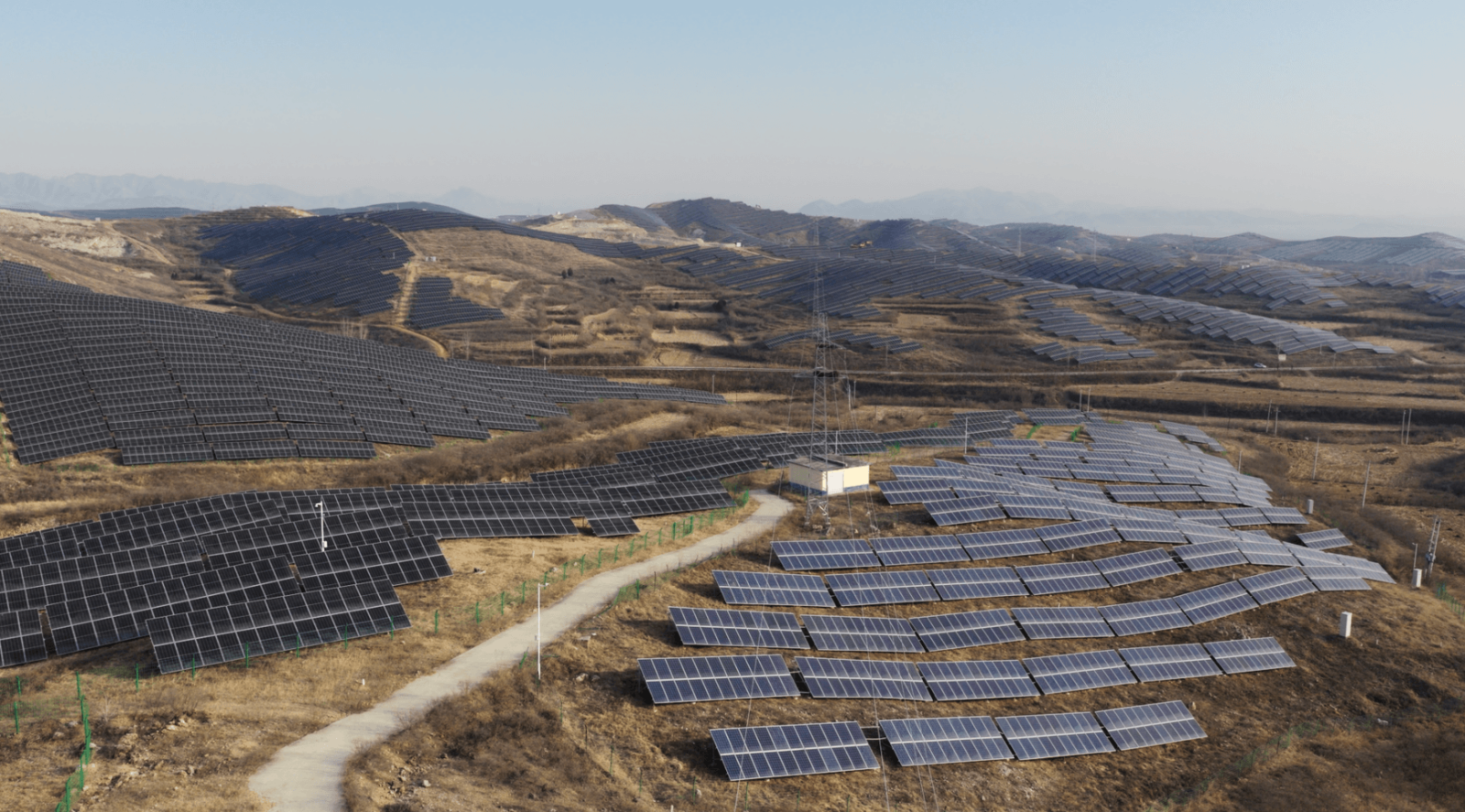
•Project Background: This project is located in Hebei Province, where Antaisolar provided a complete fixed mounting solution for a 100MW large-scale mountain PV power plant. By utilizing idle mountainous land resources, the project integrates clean energy development with regional energy structure optimization, serving as a representative large-scale mountain PV project in North China.
•Project Requirements: The project site features typical mountainous terrain with strong winds, blowing sand, uneven topography, and significant seasonal temperature variations. The client required a PV system capable of long-term stable operation under harsh mountain conditions while balancing structural strength, terrain adaptability, and construction economy. Specifically, the solution needed to: (1) Provide excellent wind resistance and structural strength to withstand strong winds in North China; (2) Flexibly adapt to mountainous terrain while maintaining array stability and energy yield; (3) Utilize durable foundation and connection designs capable of handling seasonal thermal expansion and contraction.
2. Challenges
2.1 Terrain Adaptation and Foundation Stability in Mountainous Areas
•The uneven terrain made conventional flat-ground mounting systems unsuitable. The mounting solution needed strong terrain adaptability while ensuring stable foundations under complex geological conditions.
2.2 Wind Resistance in Strong Wind and Sandy Environments
•Located in North China, the site experiences frequent strong winds and sandstorms. The mounting system required high structural rigidity and uplift resistance to prevent vibration, resonance, or module damage under extreme wind conditions.
2.3 Structural Reliability Under Seasonal Temperature Variations
•Significant temperature differences between summer and winter create thermal expansion and contraction stresses on structural connections. The system required anti-loosening and fatigue-resistant connection methods to ensure long-term reliability.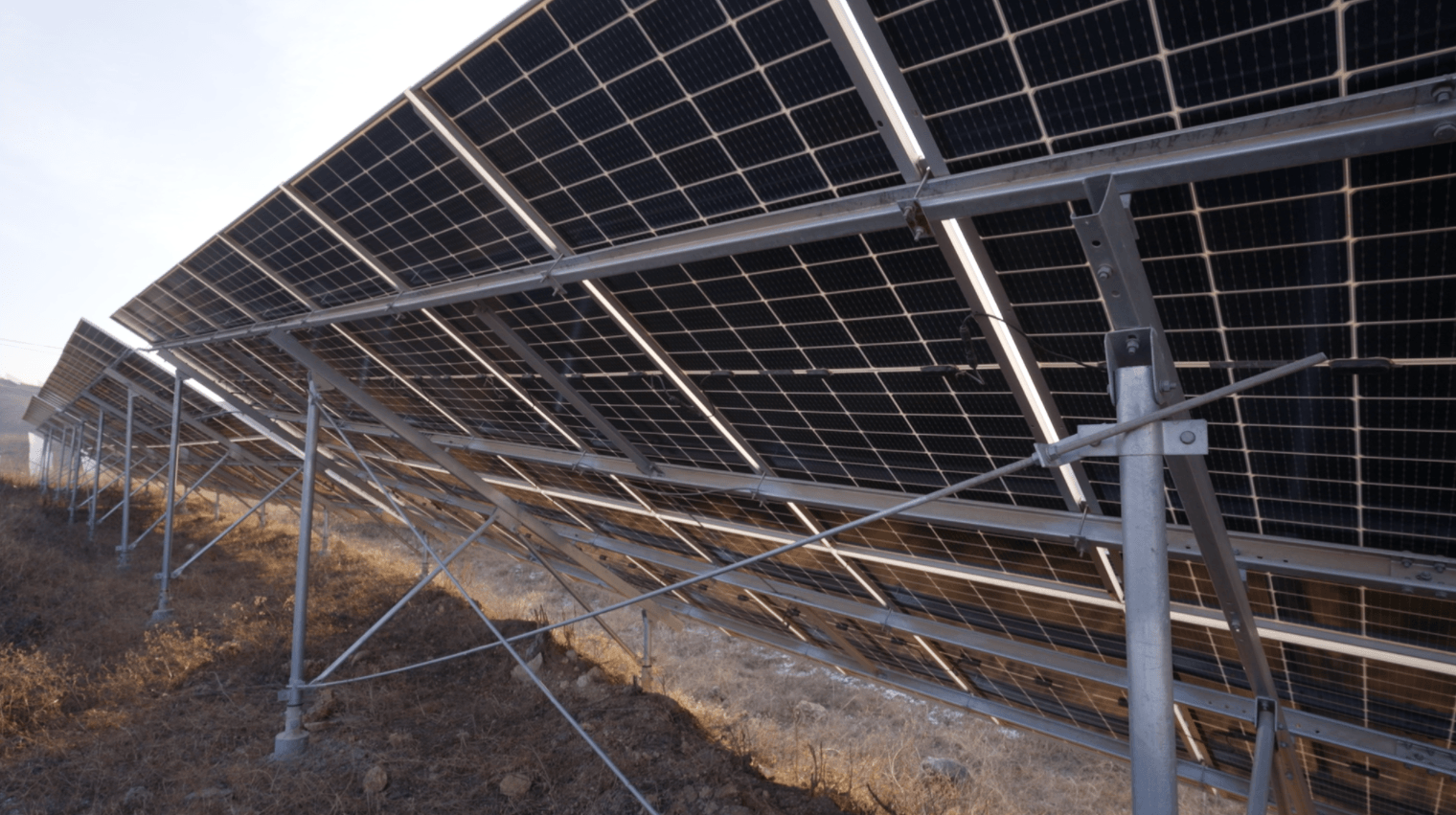
3. Solution
Antaisolar provided a customized solution centered on a dual-post, dual-bracing fixed mounting system, specifically designed for mountainous terrain and North China climate conditions.
3.1 Reinforced Foundation and Structural Stability for Mountain Terrain
•The mounting system adopts a dual-post, dual-bracing structure combined with reinforced concrete cast-in-place pile foundations, delivering high load-bearing capacity and strong resistance to settlement under complex geological conditions.
•The piles are directly connected to the columns through embedded circular steel pipes, creating a clear and efficient load transfer path while reducing additional connection components and enhancing overall structural rigidity.
3.2 Enhanced Wind Resistance and Structural Optimization
•Modules are secured using a combination of U-bolts and pressure clamps, providing reliable fixation and long-term locking force to resist loosening caused by wind-induced vibration.
•The structure was designed and validated according to local wind load parameters. The dual-post configuration significantly improves bending stiffness and operational stability under strong wind and sand conditions.
3.3 Reliable Connections and Weather-Resistant Materials
•The U-bolt connection design effectively accommodates thermal expansion and contraction while maintaining stable preload force over time.
•All steel components are treated with hot-dip galvanization, ensuring excellent corrosion resistance and long-term durability under North China’s harsh climate conditions, with a design life exceeding 25 years.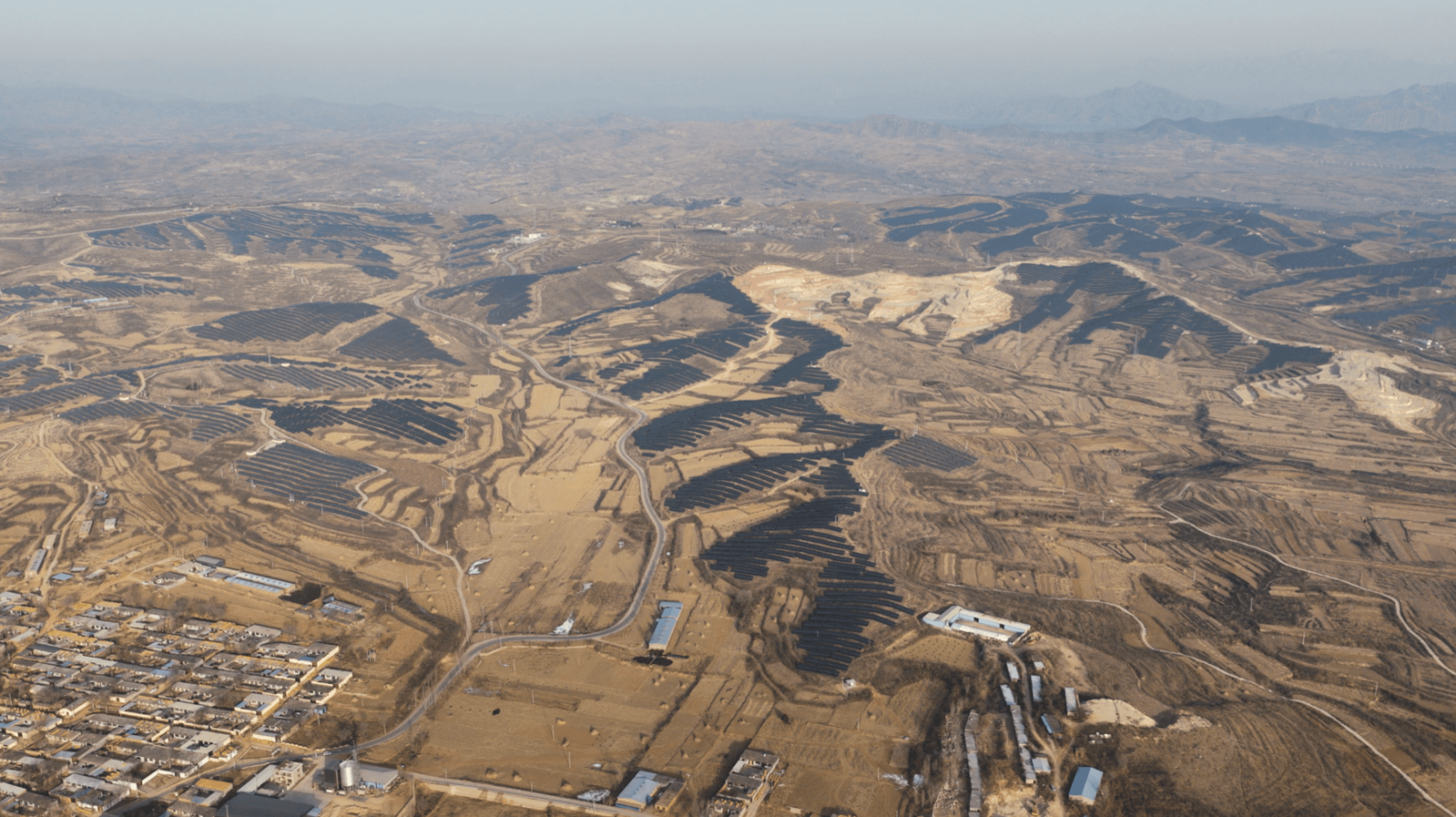
4. Results
•The 100MW mountain PV power plant has been successfully commissioned and is operating reliably. The dual-post, dual-bracing fixed mounting system provided by Antaisolar effectively addressed challenges related to mountainous terrain, strong winds, blowing sand, and significant temperature variations, ensuring long-term structural safety and operational stability.
•The project demonstrates a proven approach for large-scale PV deployment in mountainous and high-wind regions of North China. Its technical practices—including dual-post structures, embedded pipe connections, and U-bolt fixation methods—provide valuable engineering references for PV projects in similarly complex terrains and harsh climates.
For more information, please visit: https://www.antaisolar.com/
Contact us: [email protected]
•Project Background: This project is located in Hebei Province, where Antaisolar provided a complete fixed mounting solution for a 100MW large-scale mountain PV power plant. By utilizing idle mountainous land resources, the project integrates clean energy development with regional energy structure optimization, serving as a representative large-scale mountain PV project in North China.
•Project Requirements: The project site features typical mountainous terrain with strong winds, blowing sand, uneven topography, and significant seasonal temperature variations. The client required a PV system capable of long-term stable operation under harsh mountain conditions while balancing structural strength, terrain adaptability, and construction economy. Specifically, the solution needed to: (1) Provide excellent wind resistance and structural strength to withstand strong winds in North China; (2) Flexibly adapt to mountainous terrain while maintaining array stability and energy yield; (3) Utilize durable foundation and connection designs capable of handling seasonal thermal expansion and contraction.
2. Challenges
2.1 Terrain Adaptation and Foundation Stability in Mountainous Areas
•The uneven terrain made conventional flat-ground mounting systems unsuitable. The mounting solution needed strong terrain adaptability while ensuring stable foundations under complex geological conditions.
2.2 Wind Resistance in Strong Wind and Sandy Environments
•Located in North China, the site experiences frequent strong winds and sandstorms. The mounting system required high structural rigidity and uplift resistance to prevent vibration, resonance, or module damage under extreme wind conditions.
2.3 Structural Reliability Under Seasonal Temperature Variations
•Significant temperature differences between summer and winter create thermal expansion and contraction stresses on structural connections. The system required anti-loosening and fatigue-resistant connection methods to ensure long-term reliability.
3. Solution
Antaisolar provided a customized solution centered on a dual-post, dual-bracing fixed mounting system, specifically designed for mountainous terrain and North China climate conditions.
3.1 Reinforced Foundation and Structural Stability for Mountain Terrain
•The mounting system adopts a dual-post, dual-bracing structure combined with reinforced concrete cast-in-place pile foundations, delivering high load-bearing capacity and strong resistance to settlement under complex geological conditions.
•The piles are directly connected to the columns through embedded circular steel pipes, creating a clear and efficient load transfer path while reducing additional connection components and enhancing overall structural rigidity.
3.2 Enhanced Wind Resistance and Structural Optimization
•Modules are secured using a combination of U-bolts and pressure clamps, providing reliable fixation and long-term locking force to resist loosening caused by wind-induced vibration.
•The structure was designed and validated according to local wind load parameters. The dual-post configuration significantly improves bending stiffness and operational stability under strong wind and sand conditions.
3.3 Reliable Connections and Weather-Resistant Materials
•The U-bolt connection design effectively accommodates thermal expansion and contraction while maintaining stable preload force over time.
•All steel components are treated with hot-dip galvanization, ensuring excellent corrosion resistance and long-term durability under North China’s harsh climate conditions, with a design life exceeding 25 years.
4. Results
•The 100MW mountain PV power plant has been successfully commissioned and is operating reliably. The dual-post, dual-bracing fixed mounting system provided by Antaisolar effectively addressed challenges related to mountainous terrain, strong winds, blowing sand, and significant temperature variations, ensuring long-term structural safety and operational stability.
•The project demonstrates a proven approach for large-scale PV deployment in mountainous and high-wind regions of North China. Its technical practices—including dual-post structures, embedded pipe connections, and U-bolt fixation methods—provide valuable engineering references for PV projects in similarly complex terrains and harsh climates.
For more information, please visit: https://www.antaisolar.com/
Contact us: [email protected]
Previous
29MW Automobile Tire Factory Roof Mounting System | Anhui, China
Next
20MW Roof Mounting System Guangdong, China |Textile and Clothing Factory
RELATED NEWS